Showing posts with label 2010. Show all posts

Monday, August 8, 2011

2011 Nissan 370Z Roadster

By starting design of the 2011 Nissan 370Z Roadster
When lowered, it tucks away under a body-coloured hard tonneau cover which also helps to reduce wind turbulence at speed, allowing occupants of the ‘double cockpit’ to enjoy fully the sounds and sensations of open air performance motoring.
Other design cues already seen on the Nissan 370Z Coupe have transferred to the Roadster. They include the distinctive boomerang LED rear and arrowhead front lights, while familiar ‘Z’ features such as the vertical door handles, twin tail pipes and ‘Z’ badges in the side repeaters are also present.
Inside the Nissan 370Z Roadster, the driver-focused cabin also boasts many features now synonymous with the Z, such as an engine Push Start button, floor hinged throttle pedal, centrally placed tachometer and three separate hooded dials – now including an oil temperature gauge – sitting centrally on the top of the dashboard and angled towards the driver.

The Nissan 370Z Roadster’s roof is fully automatic with no requirement to latch it manually into place. The roof can be lowered at walking speeds and can also be operated from outside the car, by pressing and holding the door-locking button for three seconds. It takes just 20 seconds for the roof to be raised and locked into place or lowered out of sight beneath its tonneau.
The fabric hood has been given a smooth inner lining covering the frame and reducing noise levels, while the system uses a new hydraulic pump that’s silent in operation in place of the electric motor used previously.
“At launch, both the Coupé and Roadster were highly acclaimed for their combination of excitement and style. The subtle suspension changes developed specially to meet European demands and tastes – not to mention the enhanced equipment levels – make the 2011 370Z more desirable than ever,” said Thomas.
at the same time as work began on the Coupé, Nissan designers have been able to ensure the soft-top version has a sophisticated silhouette with better, more natural, integration of the hood into the overall design.
The distinctive result echoes the ‘Z character’ with a blend of sweeping curves and aggressively short overhangs while the shape of the roof itself flows more naturally into the rear of the car when the roof is in place.

Sunday, June 12, 2011

chevrolet spark

The new Chevrolet Spark is built to serve the burgeoning mini car segment, the fastest growing area of the new car market across the entire world, it is a newcomer that has been designed to appeal to car buyers in every inhabited continent across the globe, from India to Africa, Australia to the USA.

But it's in Europe where Chevrolet Spark will find its true identity. On sale in all major European markets, including the UK, from the first quarter of 2010, it exceeds all expectations of what a buyer might expect from a small car - be it as an urban motorist, or one who simply doesn't need a larger car.

From the outset, Chevrolet Spark was engineered and designed to meet exacting standards. The bodyshell is exceptionally stiff, with no external panel gaps greater than 3mm, and the fit and finish of the interior is designed to match, if not beat that of cars in a class or two above.
Yet despite the quality, Chevrolet Spark is also designed to be edgy, vibrant and fresh, as well as to offer exceptional levels of space and practicality. There aren't many cars with such a small footprint that can offer the benefits of five doors, five seats and a usable luggage area, for example.
"We've styled and engineered the Chevrolet Spark so that it can compete anywhere in the world where there's a demand for mini cars and the benefits they bring," said Jack Keaton, vehicle line executive for the new model. "The Chevrolet Spark is, first and foremost, a car that offers great economy and manoeuvrability, yet it is also quite sophisticated. We think it will turn heads with an aggressively stylish design and we think it's going to make a lot of drivers happy with its dynamic ride and handling abilities."
Keaton said that while the Chevrolet Spark is certainly affordable, it was not developed to be either the most or least expensive offering in its category.
"We developed the Chevrolet Spark with the idea that buyers would feel they got a lot of vehicle for their currency," he said. "From a complete package perspective, we think the Spark will be among, if not the best five-door car in its segment. It offers high quality craftsmanship, is well-equipped with safety technologies and, most importantly, is fun to drive."
Much of the Chevrolet Spark's character comes from its styling.
"From the beginning, we wanted to have a revolution in size and design," explained Taewan Kim, vice president of GM DAT Design. "We wanted to take a big step forward to deliver a completely new statement, especially in the design of the car.
"We wanted it to look ready to pounce, it needed to look great from 360 degrees and it needed to generate excitement."
The exterior of the Chevrolet Spark features a 'wheels-out; body in' stance, its single arc roofline accentuated by strong, clean body sides free of cladding. The appearance is sleek; slightly aggressive, and unmistakably more upmarket than a number of mini car rivals, which tend to favour a more 'cute' approach.
This precision and attention to styling detail is not only reserved for the car's exterior - unlike some models in the segment, where interior design is clearly functional, the Chevrolet Spark manages to add a youthful, vigorous appeal to the inside of the car that is equal to the look of the exterior.
While maintaining exemplary levels of craftsmanship, the Chevrolet Spark's cabin is an iconic piece of design in itself. It maintains all of the class attributes - comfort, spaciousness and easy-to-use controls, yet delivers them in a style that is unique to the sector.
The focal point of the cabin is the motorcycle-style instrument 'pod', which sits on top of the steering column and delivers all of the essential information in a compact yet easy-to-read manner. The analogue speedometer is backed up by a digital tachometer, just like on a sports bike, backlit by upmarket ice blue lighting when the headlights are turned on. It's truly unique to the sector, and clearly illustrates the Chevrolet Spark's intention to put the fun back into function.
As well as its edgy styling, Chevrolet Spark also has advanced dynamics. It has taut, responsive handling characteristics, at the heart of which is a very stiff integral body frame structure, designed to aid the car's dynamic performance and provide the driver with a heightened sense of stability, solidity and confident road command.
The suspension follows a traditional yet effective layout - MacPherson struts at the front and a compound crank (torsion beam) axle at the rear, a combination that allows for neutral, predictable handling characteristics. It is both nippy and nimble round town, yet surefooted at higher speeds.
Depending on market and trim level, Chevrolet Spark is also available with a system known as VSES, standing for Vehicle Stability Enhancement System. This provides outstanding safety and control benefits, with electronic brake and traction control capabilities to provide precise anti-lock braking capabilities, as well as exceptional yaw stability.
Of course, even the most able driver in the most dynamically competent car can sometimes find his or herself in a situation where a collision is inevitable, so with this in mind the Chevrolet Spark was designed with high levels of passive safety inbuilt from the outset, enough to earn it a creditable four-star Euro NCAP crash test rating.
Almost 60 per cent of the car's structure consists of advanced steels, with varying levels of stiffness and built-in crush zones to absorb crash impacts. The front engine bay rails and subframe are designed to absorb energy while maintain the highest loads possible as they collapse, while a transition zone around the base of the A-pillars and front bulkhead effectively distributes crash energy around rather than into the passenger compartment.
A similar crush zone exists at the rear, with the fuel tank and its connections designed in a way to minimise the chance of ruptures. Additional rear impact loads are absorbed by a strong rear cross member, as GM's internal rear crash measurement standards are greater than industry required standards.
High levels of occupant protection are further enhanced by twin front airbags, side curtain airbags and additional seat mounted thorax and abdomen airbags, seatbelt pretensioners and a pedal retraction system, which pulls the pedal box away from the car's occupants in the event of a frontal collision, reducing the risk of lower leg injury.
Two engines are on offer at launch - both petrol units with displacements of 1.0 and 1.2-litres.
Both units are closely related and use a cast iron block and alloy head, with a double overhead camshaft and four valves per cylinder. They feature multi-port fuel injection and are both Euro V emissions compliant.
The two engines use advanced features such as port de-activation technology to improve exhaust gas recirculation, leading to optimal fuel efficiency and idle stability, along with a timing chain to ensure a lifetime of low maintenance and running costs.
Practicality is a big plus, too. It may not be very big on the outside, but the Chevrolet Spark's clever design means it is able to make the most out of its available space.
Front seat passengers enjoy up to 1067mm of available legroom (893mm in the rear), while shoulder space of 1295mm (1255mm rear) and headroom of 1010mm (947mm) are also rated among the very best in the segment, proving that even when a car is small, it doesn't need to be cramped.
With five doors and five available seats, the Chevrolet Spark is one of the most space-efficient cars in the mini segment.

Much of the interior space is down to the car's clever design - details such as the steering column-mounted instrument pod and longer than average wheelbase allowed the designers to reduce cabin intrusion, allowing for as much space between the axles as possible.
On top of this, the cabin was planned to accommodate as much supplementary storage space as possible. The centre console, for example, incorporates a bin for carrying smaller items such as a mobile phone, MP3 player or packet of chewing gum, while there's also a double cup/drinks holder ahead of the gear shifter.
All of this in such a compact package: at only 3640mm long and 1597mm wide, it will easily squeeze into tight city spaces, yet thanks to its short overhangs and clever cabin design the compact dimensions come without compromise.

While we can't promise that the Chevrolet Spark will put an end to the stresses of commuting, we do believe it will make urban life much easier to tolerate - as the Chevrolet Spark's packaging, driveability, classless looks and easy-to-manoeuvre nature make it a multi-faceted car that will fit in with even the most frantic of lifestyles.
Chevrolet Spark is a car with immense character, a fresh youthful design, a classless image, great practicality and low cost of ownership; in short, everything an urban motorist needs, and a lot more besides.
Design
For years, car designers believed that the key to making a car appeal in the mini segment was to make it cute and cuddly.
But Chevrolet doesn't do cute and cuddly. It's out of keeping with almost a century of iconic vehicle design, where every Chevrolet has had to deliver a new level of edginess, character and a bold identity.
As a result, the Chevrolet Spark has a purposeful stance. It isn't cute, but it sure is handsome, its angular, self-confident profile giving it the proportions of a larger vehicle, and making it appear self-confident among a sea of meeker looking city cars.
Chevrolet Spark was also designed with global appeal in mind. Chevrolet has always been a brand with a large footprint across the world, but its growth in Europe makes that now, more than ever, relevant.
It originated from the GM DAT design centre in Korea, with influences from all of the key markets in which Chevrolet is a major player. It's goal? To redefine what was expected in the mini car segment. To break the rules, defy convention and deliver something that offered great style and value for money, but without compromise.
"From the beginning, we wanted to have a revolution in size and design," explains Taewan Kim, vice president of GM DAT Design. "We wanted to take a big step forward to deliver a completely new statement, especially in the design of the car.
"We wanted it to look ready to pounce, it needed to look great from 360 degrees and it needed to generate excitement."
The exterior of the Chevrolet Spark features a 'wheels-out; body in' stance, its single arc roofline accentuated by strong, clean body sides free of cladding. The appearance is sleek; slightly aggressive, and unmistakably more upmarket than a number of mini car rivals.
The headlamps are sculptured elliptically into the body, stretching from the front grille right back to the A-pillar, with clear polycarbonate lenses and chrome coated headlamp bezels to emphasise the frontal styling.
From the side, the rear door handles are hidden away alongside the C-pillar, answering the conundrum faced by many a designer - is a sporty three-door better than a practical five-door? Chevrolet Spark delivers the appeal of both.
What's more, the sharp looks are enhanced by a level of fit and finish that's second to none. Every single panel gap is laser straight, and engineered to be below 3.0mm or less across the car.
This precision and attention to styling detail is not only reserved for the car's exterior - unlike some models in the segment, where interior design is clearly functional, the Chevrolet Spark manages to add a youthful, vigorous appeal to the inside of the car that is equal to the look of the exterior.
While maintaining exemplary levels of craftsmanship, the Chevrolet Spark's cabin is an iconic piece of design in itself. It maintains all of the class attributes - comfort, spaciousness and easy-to-use controls, yet delivers them in a style that is unique to the sector.
The focal point of the cabin is the motorcycle-style instrument 'pod', which sits on top of the steering column and delivers all of the essential information in a compact yet easy-to-read manner. The analogue speedometer is backed up by a digital tachometer, just like on a sports bike, backlit by upmarket ice blue lighting when the headlights are turned on. It's truly unique to the sector, and clearly illustrates the Chevrolet Spark's intention to put the fun back into function.
Another smart feature is the Chevrolet Spark's Integrated Centre Stack, which incorporates all of the radio, sat nav (where fitted) and heating, ventilation and air conditioning controls in one central location, leaving the fascia clean and uncluttered and putting all of the major switches in one central location that is simple and intuitive to use. The heating and ventilation controls feature a crystalline surround, which lights up in ice blue to match the instrument panel when driving at night.
A neat appliqué around the instrument panel adds even more attention to detail - finished in high grade technical grain on base models, piano black on mid-range or a choice of silver, red or blue surrounds on top models is matched by inserts in the doors, while colour-coded seat fabrics are also available.
Market and Brand
With the environment and the economy at front of mind for many motorists, the 21st century has seen a huge swing in consumer behaviour, away from excess and towards a more frugal, prudent approach to spending.
The Chevrolet Spark is the perfect antidote to such conservatism. It may be frugal. It may be financially prudent. But at the same time it shows how motorists can manage their responsibilities yet at the same time still have fun. No longer do people buy small or inexpensive cars because it's all they can afford - they buy them because that's exactly what they want. Chevrolet Spark is a car designed to appeal to the heart just as much as it is to the head.
Building on the strengths of the iconic Chevrolet brand - a name that for years has represented, perhaps more than any, the joy and freedom of motoring by virtue of the fact it has appeared in popular music more often than any other car brand - the Chevrolet Spark is a modern world interpretation of those very values.
Styled and developed by a young and dynamic team across the world, the Chevrolet Spark truly is a global car. It is based on GM's Global Mini Car Architecture, which will be on sale in more than 100 countries worldwide between now and 2013. The Chevrolet Spark itself will be sold across Europe, Australia, Korea and even the USA, reflecting the significant changes in consumer trends, even in countries where small cars have previously never made much of an impact in the market.
In Europe, of course, that impact has already been immense. In Italy, Chevrolet's strongest market in Western Europe, over 50 per cent of cars sold are in the A and B (mini and supermini) segments of the market, while in France and the UK the two segments account for over 30 per cent of sales.
Chevrolet Spark is a car that cunningly bridges the gap between a city car and a fully-fledged supermini. It has five-doors and five seats, with leg and headroom among the best in class, yet at the same time is as compact and easy to manoeuvre as the smallest city cars.
Its striking, modern design works harmoniously with its practicality to offer a compromise-free car for urban motorists, with the convenience of a much larger vehicle, youthful, vibrant appeal and a level of classlessness that only a legendary name like Chevrolet can evoke. It may be small and inexpensive, but the Chevrolet Spark is not a car you buy because it's cheap. It works on so many more levels than that.
It also needed to be fun-to-drive, safe, well-equipped, beautifully made and refined - not normally words associated with city cars, but all of which are applicable to Chevrolet Spark.
Built in South Korea initially (although production in India and the USA will follow), the Chevrolet Spark is set to go on sale in all key European markets in the first quarter of 2010.
Powertrain
Across Europe, two engines will be offered in the Chevrolet Spark - both petrol units with displacements of 1.0 and 1.2-litres.
Both units are closely related and use a cast iron block and alloy head, with a double overhead camshaft and four valves per cylinder. They feature multi-port fuel injection and are both Euro V emissions compliant.
The two engines use advanced features such as port de-activation technology to improve exhaust gas recirculation, leading to optimal fuel efficiency and idle stability, along with a timing chain to ensure a lifetime of low maintenance and running costs.
The smaller of the two units is of 995cc displacement and produces 68PS (50Kw) at 6,400rpm, enough to power the car from 0-62mph in 15.5 seconds, and on to a top speed of 96mph. The unit produces 93Nm of torque at 4,800rpm, with a compression ratio of 9.8:1
Available in Chevrolet Spark, Spark + and LS, the unit returns 55.4mpg on the combined cycle, with a CO2; output of 119g/km.
The larger unit displaces 1206cc and produces 81PS (60Kw), with maximum torque of 111Nm at 4,800rpm. It accelerates from 0-62mph in 12.1 seconds and on to a top speed of 102mph.
Available in Chevrolet Spark LS and LT, the unit also returns 55.4mpg on the combined cycle, with a CO2; output of 119g/km.
Both engines come with a five-speed manual gearbox.
Comfort and Convenience
It may not be very big on the outside, but the Chevrolet Spark's clever design means it is able to make the most out of its available space.
Front seat passengers enjoy up to 1067mm of available legroom (893mm in the rear), while shoulder space of 1288mm (1263mm rear) and headroom of 1009mm (952mm) are also rated among the very best in the segment, proving that even when a car is small, it doesn't need to be cramped.
With five doors and five available seats, the Chevrolet Spark is one of the most space-efficient cars in the mini segment.
Much of the interior space is down to the car's clever design - details such as the steering column-mounted instrument pod and longer than average wheelbase allowed the designers to reduce cabin intrusion, allowing for as much space between the axles as possible.
On top of this, the cabin was planned to accommodate as much supplementary storage space as possible. The centre console, for example, incorporates a bin for carrying smaller items such as a mobile phone, MP3 player or packet of chewing gum, while there's also a double cup/drinks holder ahead of the gear shifter.
There's a generously sized glove box, seat back pockets designed to accommodate books, road atlases or laptop computers, door bin pockets on both sides with storage for a standard sized 500ml drinks bottle and neat convenience features such as an auxiliary power socket in the lower instrument panel, overhead assist grips on the front passenger and rear doors and padded sun visors, with a ticket holder on the driver's side.
Luggage space is 170-litres with the rear seat in place. The rear seat base and back both split 60:40 to fold flat increasing the luggage space to 568 litres.
The cabin is also one of the most refined and well-finished in the segment. Ergonomically designed, the seats are designed to be harder wearing and longer lasting than the class average, with strong knit fabric on entry-level cars and woven fabric on upper models.
Cabin engineers paid particular attention to longevity, increasing the ratio of stitches-per-inch to ensure all sew lines and seat surfaces remained tight and free from premature sagging or a stretched-seam appearance over time.
The firm 'Durometer' foam in the seats is highly bolstered and of a construction that evenly distributes the passenger's weight for high comfort on both long and short journeys.
An indication of the attention to detail that went into Chevrolet Spark's overall design comes from the testing carried out on the seats prior to launch - prototypes were tested in various seasons and climates across various road surfaces to optimise comfort, including side-by-side comparisons with key rivals.
Add to that the use of only high grade plastics in the interior and computer-controlled interior panel alignment ensuring no inside gap bigger than 5mm between door shuts and it's clear to see that the high levels of build quality seen on the Chevrolet Spark are of a level normally only found on bigger, more expensive cars.
Of course, comfort and refinement don't just come down to fit and finish or the use of high quality materials - one of the keys to delivering class leading refinement is to reduce noise, vibration and harshness levels (NVH) inside the cabin through effective damping and noise suppression.
With its tight and stiff body structure and carefully optimised damper and spring rates, Chevrolet Spark delivers a ride comfort and noise level that's easily among the best in class, making it remarkably refined for a mini car.
Much of that is down to its complex four-mount engine cradle (with a hydraulic mount on RHD cars) which is tailored to the engine's inherent torque axis, effectively damping transfer of vibration and noise in the process.
Enhanced chassis-to-body structure interface points are designed to ensure high levels of stiffness, further retarding low-frequency noise intrusion into the car's cabin, isolating much of the noise and vibration caused by road surfaces.
Dynamics and safety
Whether it's within the confines of the city limits or out on the open road, a good looking car has to be as impressive to drive as it is to look at.
That's why the engineering team behind the Chevrolet Spark focused on a number of key factors that would enable it to deliver the absolute best in terms of dynamic performance and safety.
Chevrolet Spark has a number of key passive safety features, detailed below, that are often reserved for more expensive, larger cars - but it's the car's dynamic performance that is the driver's first line of defence in any emergency situation.
As such, the Chevrolet Spark has taut, responsive handling characteristics, at the heart of which is a very stiff integral body frame structure, designed to aid the car's dynamic performance and provide the driver with a heightened sense of stability, solidity and confident road command.
The suspension follows a traditional yet effective layout - MacPherson struts at the front and a compound crank (torsion beam) axle at the rear, a combination that allows for neutral, predictable handling characteristics. It is both nippy and nimble round town, yet surefooted at higher speeds.
Chevrolet Spark is also available with a system known as ESC, standing for Electronic Stability Control. This provides outstanding safety and control benefits, with electronic brake and traction control capabilities to provide precise anti-lock braking capabilities, as well as exceptional yaw stability.
Vented front disc brakes of 236mm in diameter are fitted at the front with 200mm drums at the rear, while a four-channel ABS system is fitted to Sparks in all European markets, along with an electronic brake assist system, which automatically applies more power to the brake callipers when an urgent stop/foot pedal motion is detected.
Round town manoeuvrability and nimbleness is enhanced by the Chevrolet Spark's efficient hydraulic rack-and-pinion steering, which is geared to give a minimum turning radius of only 5 metres, with just over three turns lock to lock - it's quick ratio making city driving more of a pleasure than a chore.
Of course, even the most able driver in the most dynamically competent car can sometimes find his or herself in a situation where a collision is inevitable, so with this in mind the Chevrolet Spark was designed with high levels of passive safety inbuilt from the outset.
Almost 60 per cent of the car's structure consists of advanced steels, with varying levels of stiffness and built-in crush zones to absorb crash impacts. The front engine bay rails and subframe are designed to absorb energy while maintain the highest loads possible as they collapse, while a transition zone around the base of the A-pillars and front bulkhead effectively distributes crash energy around rather than into the passenger compartment.
A similar crush zone exists at the rear, with the fuel tank and its connections designed in a way to minimise the chance of ruptures. Additional rear impact loads are absorbed by a strong rear cross member, as GM's internal rear crash measurement standards are greater than industry required standards.
High levels of occupant protection are further enhanced by twin front airbags, side curtain airbags and additional seat mounted thorax and abdomen airbags, seatbelt pretensioners and a pedal retraction system, which pulls the pedal box away from the car's occupants in the event of a frontal collision, reducing the risk of lower leg injury.
Other safety features include three-point seatbelts for all five seating positions, ISOFIX rear child seat fixings and an inbuilt pedestrian protection system, designed to protect a victim's head from hitting hard points of the car's body or engine block in the event of a collision.
The Chevrolet Spark recently attained a four-star Euro NCAP rating, putting it among the best in class for small cars.
It received 69 out of a possible 100 points, coming within a single point of a maximum five-star rating.
"The outstanding performance of our new mini-car in stringent Euro NCAP testing reflects our attention to safety as well as eye-catching styling and great packaging," said Wayne Brannon, President and Managing Director of Chevrolet Europe. "The Chevrolet Spark meets the high expectations of mini-car buyers in Europe's mature markets."
In Adult Protection, the Chevrolet Spark recorded the maximum score of 8 points in the side impact crash test against a moving deformable barrier. It also received a high score of 7.35 points out of 8 points in the side pole test, indicating solid passenger protection in the event of a more severe side collision.
In Child Protection, the Chevrolet Spark also scored maximum points in Child Restraint System dynamic performance tests, which evaluate child protection from possible injuries in various types of crashes. Crash test dummies representing 18-month old and 3-year-old children were properly contained in their restraints by the Chevrolet Spark's protective shell during side impact tests.
These achievements are the result of the Chevrolet Spark's structural enhancements combined with a full offering of active and passive safety features. More than 66 per cent of the car's body is constructed of high-strength steel, with 16.5 per cent comprised of ultra-high-strength steel. The latter is mostly used in the longitudinal member of the underbody, and front and center pillars in the side body structure. This contributed to its strong performance in side crash tests.
Value and running costs
The coolest new mini car in town is set to offer value for money and running costs that are as enticing as its vibrant good looks!
Set to arrive in Chevrolet retailers in Spring 2010, the all-new Chevrolet Spark will be available from only £6,945 on-the-road, with a choice of two engines.
The entry-level Chevrolet Spark will be offered with a 1.0-litre engine developing 68PS, coupled to a five-speed manual gearbox. Despite being the smallest car in the Chevrolet line-up, it comes with six airbags as standard, proving that even the most compact cars can offer class-leading safety. The model recently achieved an excellent four-star Euro NCAP crash test rating, with a maximum five stars for child protection.
Models in Chevrolet Spark + trim, also available with the 1.0-litre engine, come with air conditioning, electric front windows and central locking, along with a USB compatible four-speaker stereo.
The LS, which is expected to be the most popular trim level, comes with a choice of the 1.0-litre or an 81PS 1.2-litre engine, and adds remote central locking, silver trim detailing, a sunglasses holder, 14-inch wheels, body-coloured door handles and mirrors, a chrome-effect grille surround, front fog lamps and a body-coloured rear spoiler.
For £500 more than the 1.2 LS, customers can add a plus pack - the LS+ gets smart alloy wheels, electric windows front and rear, a trip computer, heated electric door mirrors, roof bars and steering wheel audio controls.
The range-topping LT, which comes with the 1.2-litre engine only, comes with a level of equipment you'd normally expect of a much larger and more expensive car, including 15-inch alloys, climate control, interior detailing to match the exterior (depending on colour), an exterior body kit and a six-speaker stereo.
Options across the range include metallic paint, rear parking sensors and electronic stability control.
What's more, the Chevrolet Spark will be cheap to run - as well as economy of up to 67.3mpg on the extra-urban cycle, it qualifies for incredibly low insurance. Under the new 50 Group rating system, the Chevrolet Spark 1.0 is in Group 1, the lowest possible band. The full list of insurance groupings is below.

Friday, January 7, 2011

Hyundai i-flow Concept, 2010

Hyundai i-flow Concept, 2010


 Making its global debut at the 2010 Geneva Motor Show, the Hyundai i-flow Concept car carries forward the company's evocative new form language, 'fluidic sculpture'. The flowing, elegant lines not only create a bionic, futuristic shape, but also contribute to exceptional aerodynamics, helping to reduce the car's CO2 output to just 85g/km and fuel consumption to only 3l/100km.

Hyundai's first diesel hybrid powertrain is also a key factor in delivering such an environmentally-conscious return, as is the application of next-generation materials and technologies developed in cooperation with leading chemical company BASF.

Previewing a future D-segment contender
With an overall length of 4.780mm and a 2.800mm wheelbase, the Hyundai i-flow Concept brings new ideas and a pioneering form to the traditional European D-segment. The dramatically-sculpted forms of the interior and exterior make for a striking sports sedan, and its width and height (1.850mm and 1.420mm respectively) give it an athletic stance.

The name i-flow reflects the exceptionally aerodynamic shape and the flowing lines of the concept car's eye-catching styling, and retains the 'i' prefix of Hyundai's established alphanumeric nomenclature for Europe. In 2011 Hyundai will bring into production a new challenger in the segment, drawing on the Hyundai i-flow Concept's sleek styling and innovative technology.

Inside: minimum weight, maximum space and a bionic feel
The interior of Hyundai i-flow Concept redefines the perception of space in a sedan bodystyle. Fundamental elements, such as the seats and center console, were crafted for minimal weight and volume using cutting-edge materials from BASF - one of the world's leading automotive suppliers.

The seats, for example, were developed in conjunction with BASF using advanced stress analysis, which highlighted the unnecessary mass areas and pointed towards an optimized lightweight seat structure. 'Steron', a BASF material, gives the seats a highly-resilient quality, excellent breathability and a high-tech touch.

The upper dashboard, meanwhile, is treated with Elastoskin, a sprayed skin from BASF for a sophisticated, shimmering finish.
This technical, meticulous approach combines with an abundance of natural materials to engender a bionic feel in the cabin, further symbolized by the green color tones and the leaf-like shadows projected from the roof's semi-transparent dye-sensitized solar cells.

The cockpit's main interface centers around an expansive, contoured screen, which recognizes not only touch but also gestural inputs along its fascia-wide display. The fluidic forms of the exterior are echoed in the Hyundai i-flow Concept's cabin, where continuous lines sweep from the dashboard, through the doors to the open storage area at the rear.

Energy Conservation
BASF and Hyundai R&D engineers have developed thermal engine encapsulation, which ensures that the engine reaches optimum operating temperature more quickly, by retaining heat when the car is at idle. Where a non-insulated engine would take three hours to drop to 40°C, the Hyundai i-flow Concept will stay above that temperature for 14 hours. This translates into fuel savings and emissions cuts of 5 per cent during summer and up to 9 per cent during winter.

Energy Harvesting
Another pioneering technique introduced in collaboration with BASF is thermo-electric waste heat recovery. This process equates to further reductions in fuel consumption, 5% at highest driving. In fact, up to half of the electrical energy consumed by Hyundai i-flow Concept at 80kph - 250 watts - can be recovered through the work of a thermo-electric generator. Harvested energy from hot exhaust gases is recaptured by this generator which is fitted into the exhaust manifold. The thermal electric generator then converts the wasted heat into useful electrical energy to help power auxiliary systems.

Liquid Metal, a coating with the appearance of a glossy skin made of liquid metal, has been developed by BASF Coatings. Special effect pigments in this eco-friendly waterborne coating system let the surface appear as polished metal with targeted mirror like reflections - this gives a liquid skin appearance to the car's exterior and increases the tension of the surface in the same time. The high color saturation on the Hyundai i-flow Concept adds an energizing charisma to the Hyundai concept car. The typical high contrast between highlight and flop underlines the sculptural impact of the Hyundai i-flow Concept.

Thursday, January 6, 2011

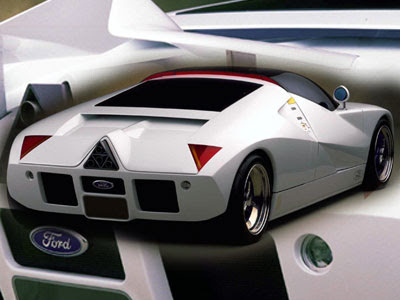
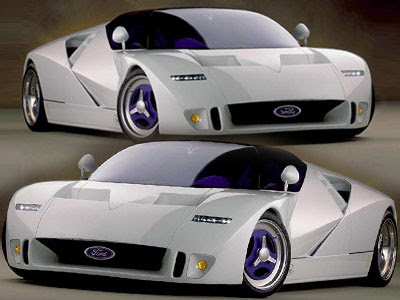
2010 Ford GT90 Super Sport Car Concept going to auction

2010 Ford GT90 Super Sport Car Concept

If Ford first introduced the GT90 Concept at the 2010 Detroit Auto Show next month, it would still be one of the most eyecatching cars on the show floor. What's amazing is that Ford unveiled the GT40 successor nearly 15 years ago. What's more, even by today's standards it's still a supercar among supercars.
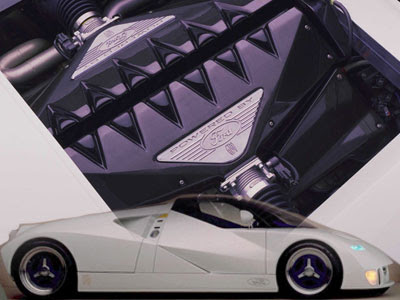
The quad-turbocharged 6.0-litre V12 puts out an estimated 720 horsepower, the body is constructed completely of carbon fiber and top speed is somewhere in the 400 kph range. The only hints that it's not a modern supercar are the all-blue interior and wheels that look dated now.
So what's all the fuss about the GT90 Concept now? RM Auctions in the States has just announced that it will be offering the concept car at its upcoming Arizona sale. That's right, this is your chance to own one of the coolest concept vehicles of all time. This is the first time that the GT90 Concept has ever been publicly for sale at auction, and RM claims that it is in "excellent running condition, having been properly stored and maintained over the year." No estimated on price is given, but we're guessing it will take a large suitcase of cash to take the car home.

2010 Ford GT90 Super Sport Car Concept

The one-off GT90 Concept Car, labeled immediately as "the world's mightiest supercar" by Ford Motor Company on December 6, 1994, was the spiritual successor to the Ford GT40, the product of a colossal feud in the early 1960s between the Blue Oval from Dearborn and the Prancing Horse of Northern Italy. The GT90 draws from the design cues of its heritage and pays homage to the famed Le Mans-winning Ford GT40s of the 1960s, which were created after the failed attempt by Ford to buy out Ferrari.
At a development cost in the neighborhood of $3 million, the GT90 was certainly worthy of pulling styling cues from the original Ford GTs, and although it was never meant for production, it was built according to a Ford press release as a "test bed for technology, engineering and design concepts, and driver-oriented features that eventually may be used in Ford production vehicles."
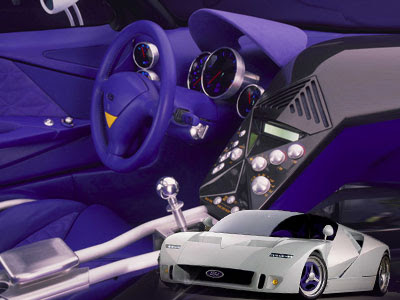
Officially unveiled to the public in January 1995 at the Detroit Auto Show, the GT90 is finished in bright white with a bright blue and carbon fiber interior. It features a mid engine quad-turbocharged V12 that produces an estimated 720 horsepower and 660 pound-feet of torque. As a result, it had a claimed top speed of 253 mph, which even by today's standards would make it one of the fastest production cars in the world – faster even than a McLaren F1, which was widely considered the world's preeminent supercar at the time.

2010 Ford GT90 Super Sport Car Concept

The engine, which was a 48-valve six-liter V12, had to be combined together with four Garrett Systems T2 turbochargers in order to reach its estimated 720 horsepower and was based on the Ford Modular engine. Created by using parts of two Lincoln V8 engines, engineers removed the last pair of cylinders from the rear of one engine and the first pair of cylinders from the front of the other engine. The cut-down engines were then welded together with the final result being a 90-degree V12, which utilized a 90.2 mm bore and a 77.3 mm stroke to achieve maximum power.
The GT90 features the FFD-Ricardo five-speed manual gearbox found on the XJ220 and, considering the torque load that it is designed to handle, is noted as having a relatively light shift quality. Also borrowed from the XJ220 comes the all around double wishbone suspension that was designed to enable the car to handle well at top speeds.

2010 Ford GT90 Super Sport Car Concept

Using Ford's new "Edge" design philosophy, the car incorporated advanced technology with a mixture of flat planes, angles, glass and triangular shapes that seemingly all collided together. The GT90 was the first car created using this new styling directive from Ford, which went on to be responsible for the creation of other Ford products like the Ka and Cougar. The effect is most impressive and a wonderfully executed stylistic throwback to its GT40 predecessor, which at once stays true to its heritage but acknowledges the advances in modern design. Taken directly from race car technology, the GT90 body panels are molded out of carbon fiber while the chassis is formed out of a honey-comb sectioned aluminum monocoque.
The GT90 is a test bed of advanced technology and design. It sports a tinted, laminated glass bubble over the cockpit and a spoiler that rises off the rear deck at high speeds. According to Ford, it has a "design that tightly enclosed its mechanicals with no wasted space; high tech lighting and blind-spot detection systems; and tiles like those on the space shuttle to shield the V12's exhaust outlets."

2010 Ford GT90 Super Sport Car Concept

After its unveiling in Detroit, the GT90 made its rounds on the Auto Show Circuit in 1995, traveling around the world to Frankfurt and as far away as Tokyo. With few other showings in between, the car recently was shipped over to Europe to be on display in the Ford of Europe 2008 exhibit at the Goodwood Festival of Speed. After returning home, the car was shipped to Alabama where it was on display as part of the Mustang 45th Anniversary Celebration.
This superb concept car remains in excellent running condition, having been properly stored and maintained over the years in between its show appearances. RM Auctions is proud to publicly offer the GT90 for the first time ever at auction. A remarkable one-off piece of automotive history and cutting-edge design, its offering may very well be a once in a lifetime opportunity for Ford devotees and concept car enthusiasts.

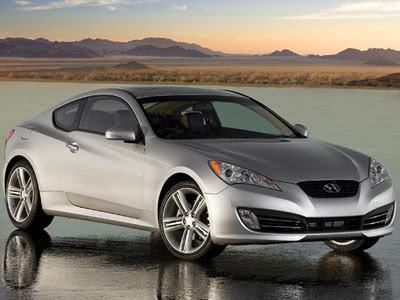
2010 Hyundai Genesis Sports Car Coupe with SHIFTRONIC to handle the additional torque

2010 Hyundai Genesis Sports Car Coupe with SHIFTRONIC to handle the additional torque

2010 Hyundai Genesis Sports Car Coupe

The people at South Korean automaker Hyundai are listening to their customers. The 2010 Hyundai Genesis Coupe, confirmed for production and a release early in 2009, follows the tradition of the 2009 Hyundai Genesis in offering a true high performance rear wheel drive, sporty architecture in an affordable package. The 2010 Genesis Coupe is a purpose-built rear-wheel drive sports coupe featuring two performance-focused engines - a212-horsepower 2.0-liter turbocharged four-cylinder engine and a range-topping all-aluminum 306-horsepower, DOHC 3.8-liter V6 engine.

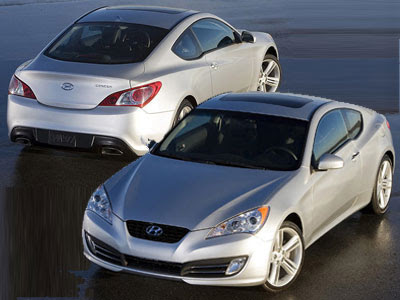
2010 Hyundai Genesis Sports Car Coupe

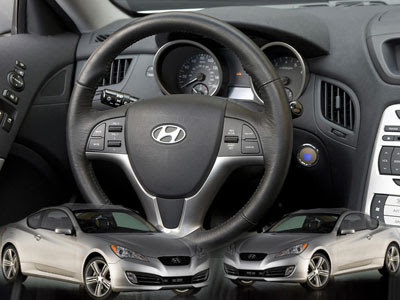
Genesis Coupe employs a MacPherson strut dual-link front suspension and a five-link rear suspension setup. Both engines are mated to a standard six-speed manual transmission. The Genesis Coupe 2.0t (2.0-liter 4-cylinder turbo) offers an optional five-speed automatic with SHIFTRONIC® while the 3.8-liter V6 offers a ZF six-speed automatic transmission with SHIFTRONIC to handle the additional torque.
The Genesis Coupe follows the styling tradition set forth by the Hyundai Tiburon, but outdoes that aging Hyundai compact sports car in every way. The Genesis Coupe comes with an available naturally aspirated V6, sure to be a motor to find its way into more of Hyundai's lineup. The high output engine offers 310 horses on premium fuel. Following the introduction earlier this year of the rear-wheel drive Genesis sport sedan, Hyundai Genesis Coupe is Hyundai's most dynamic performance car ever and the second consecutive all-new model introduction from Hyundai appealing directly to the car enthusiast.

2010 Hyundai Genesis Sports Car Coupe

Hyundai Genesis Coupe uses the same flexible rear-wheel drive architecture originally developed for the Genesis sport sedan.
The 2010 Hyundai Genesis Coupe offers Xenon high-intensity discharge (HID) headlights. The advantages of HID headlamps include greater lighting power, daylight-type lighting and reduced power consumption. In addition, the cut lines of the new HID headlights are extremely precise, providing maximum nighttime visibility without distracting other drivers.
All Hyundai Genesis Coupe models feature standard four-channel ABS with Electronic Brake-force Distribution (EBD) to optimize brake performance under various dynamic loading conditions. The system also includes Brake Assist, which provides maximum ABS-level braking force when a panic stop is detected.

2010 Hyundai Genesis Sports Car Coupe

It is nice to see that Hyundai, an automaker currently enjoying growth and a solid reputation for producing mainstream-market cars that last, is making steps toward the sports car market. The styling of the Genesis Coupe is hit or miss, some will love it and others will wonder what Hyundai was thinking. But, with the sports car pedigree to back it up, the Genesis Coupe should be another worldwide hit for Hyundai.

2010 Hyundai Genesis Sports Car Coupe

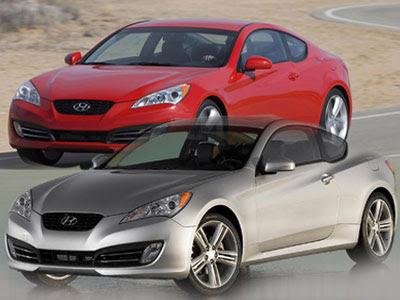
The Hyundai Genesis Coupe is offered in three trim levels: the stylish and affordable GS, the premium-sport GT featuring the 3.8-liter V6, and the high-performance SE, available with either the 2.0-liter turbocharged four-cylinder engine or the 3.8-liter V6 engine.

Wednesday, January 5, 2011

2010 Hamann Super Sports Cars Victory II

2010 Hamann Super Sports Cars Victory II
German tuning house Hamann, Hamann Victory is presented based on the super sports cars Lamborghini Gallardo first, and its latest projected, dubbed the Victory II, is a prime example.
Based off the Lamborghini Gallardo LP560-4, the 2010 Hamann Super Sports Cars Victory II features a completely new look thanks to all new body panels, functional roof inlet, rear wing and 20-inch Hamann wheels. The car body becomes broader and the engine performance as well as the amount of carbon parts is significantly increased.
2010 Hamann Super Sports Cars Victory II
Hamann car equips the Victory II with 20 inch Edition Race rims with a special varnish in order to emphasize the new dynamic look. At the same time, the reduced unsprung masses improve the handling and the acceleration and braking response. The recommended wheel/tyre combination is 9.5Jx20 inches with 235/30ZR20 tyres at the front and 13Jx20 rims with 325/25ZR20 tyres at the back.
The back of the car is enhanced by a diffuser and a newly designed rear wing which pushes the car onto the road at high speeds. Hamann offers the rear wing either in fibre glass or the ultra light and persistent carbon. On top of that, a carbon layer can be applied to the bonnet.
With the LP560-4 already producing 552 bhp and 398 lb-ft torque, Hamann decided to do only minor modifications to the 5.2L V10. New engine programming results in 20 more horsepower and an additional 26 lb-ft, resulting in a new top speed of 204 mph. Therefore, the 2010 Hamann Super Sports Cars Victory II reaches an impressive 328 km/h top speed. The impressive V10-Sound turns even more remarkable by applying an end muffler to the serial end pipes.
2010 Hamann Super Sports Cars Victory II
The interior of the 2010 Hamann Super Sports Cars Victory II is enhanced by a 14-part carbon set which includes decorative blends, the steering wheel and the door openers. The Hamann-sports seats with the carbon back render a perfect seating position.
2010 Hamann Super Sports Cars Victory II

Tuesday, January 4, 2011

2010 BMW Sports Cars Z4 GT3

2010 BMW Sports Cars Z4 GT3
The German company BMW has been considered as one of the top manufacturers ever since it was first introduced in 1916, they have been an expert when it comes to creating new and innovative vehicles to cater to the market. GT3 BMW Z4, which is officially launched and completed the first test drive in early March, already enjoying great popularity among customers of BMW Motorsport. The first cars delivered to private teams, BMW will prepare them for use in national and international championships.
2010 BMW Sports Cars Z4 GT3
BMW Z4 production model is impressive: with a long hood, wheel arches are lit, the long wheelbase and narrow projection, this car offers a unique look. BMW Motorsport engineers two passengers provide a good basis to develop close to GT3 racing car production.
“Information about the 2010 BMW Sports Cars Z4 GT3 very positive,” said BMW Motorsport Director Mario Theissen. ‘Round these sports cars in the range of our products, and provides drivers and teams a chance to compete at the championships in accordance with the GT3 regulations – such as the FIA GT3 European Championship, the International GT Open or Masters ADAC GT – and 24-hour endurance races." In addition, the BMW M3 GT2, the BMW 320si WTCC, which complies with Super2000 regulations, and the close-to-production BMW M3 GT4 are also available to customer teams from all over the world at BMW Motorsport Distribution.
2010 BMW Sports Cars Z4 GT3
The largest difference between production and racing car can be found under the bonnet: while the production version of the BMW Z4 is driven by a six-cylinder engine, the GT3 car is powered by a 4.0-litre eight-cylinder engine similar to the unit used in the BMW M3 GT2. This powerful heart produces over 480 bhp. Its excellent performance characteristics and good torque curve make the base engine from the production version of the BMW M3 predestined for use in motorsport.
Front and rear wings, bonnet, roof, fender and many other components are made of carbon fibre reinforced plastics (CFRP). Using this lightweight, torsion-resistant material contributed significantly to reducing the weight of the 2010 BMW Sports Cars Z4 GT3 to 1,200 kilograms. As with all cars in the BMW customer racing range, the emphasis was also put on cost-efficiency when developing the 2010 BMW Sports Cars Z4 GT3. As a result, the car offers an excellent cost / quality ratio and gives the team a chance to participate personally in the affordable sports car at the highest level.
2010 BMW Sports Cars Z4 GT3
The BMW Z4 GT3 is available as a racing version is available from the second quarter of 2010 at an estimated price of 298,000 Euro (plus VAT).

Sunday, December 26, 2010

Alfa Romeo 159 1750 TBi, 2010

Alfa Romeo 159 1750 TBi, 2010


The new 159 is designed to express a sporting yet seductive personality and boasts road holding and performance that set new standards for this class of car. Two new engines in particular (a 200 HP, 1750 cc turbocharged petrol engine and a 170 HP 2.0 JTDM diesel) place the Alfa Romeo 159, in the power range that accounts for over half of Alfa Romeo sales.

Under their fascinating and highly personal exterior, all Alfa Romeos a choice of superb engines, all packed with the latest technology and bursting with performance. Alfa Romeo engines are the perfect embodiment of the sporting soul that has always set the marque apart from the competition. The Alfa Romeo 159 is certainly no exception.

The new 1750 cc turbo petrol engine (manufactured by FPT - Fiat Powertrain Technologies) comes combined with a six speed manual gearbox and boasts advanced ignition control solutions including direct fuel injection, two continuously variable valve timing units, a turbocharger and a revolutionary scavenging control system. The resulting performance is comparable to - or better than - that of many 3 litre engines while still delivering fuel consumption typical of a compact four cylinder unit.

The force behind the development of any Alfa Romeo engine is the company's determination to use technology to enhance driving pleasure. This certainly applies to the development of the new, Euro 5, "1750 Turbo Benzina 200 CV" unit destined immediately for the Alfa Romeo 159 and later on for the Alfa Romeo Brera, Spider and 159 Sportwagon.

The engine takes the Alfa Romeo 159, with its refined Italian styling and typical sporting elegance to an impressive top speed of 235 kph and accelerates it from 0 to 100 kph in just 7.7 seconds. The 200 HP Alfa Romeo 159 1750 TBi is therefore a true representative of Alfa's exclusive motoring lifestyle. Far from being a mere 'means of transport', the new 159 is a real driver's car. It delivers genuine sports performance and muscular acceleration thanks to generous torque and smooth response even at low revs and the extended power band of a modern, advanced petrol engine that minimises the need for you to 'work' the gearbox. The engine sound too is inspiring without ever becoming tiresome.

Alfa Romeo 2uettottanta Concept, 2010

Alfa Romeo 2uettottanta Concept, 2010


To mark its 80th anniversary, Pininfarina proposes an "open" Alfa Romeo 2uettottanta Concept that is exciting and a delight to drive. For those who still like to dream in a car. For those looking for a mixture of vanity, entertainment, and the pleasure of life in the open air. For those who love icons as the greatest expression of the age we live in. For those who want their cars to be an uncommon sensory experience in terms of both style and driving, without being obsessed by performance. For those who want to be excited by a dynamic, sporty car that transmits the exclusiveness and refinement typical of an Alfa Romeo spider designed by Pininfarina.

2uettottanta: a name that evokes the legendary Duetto, but also the years of activity at Pininfarina, which launches the celebrations for its 80th anniversary with this concept car. And it has decided to do so with a type of car that is by definition, the work of Pininfarina: an Alfa Romeo spider. A very Italian product, which has become an export brand, representing the inexhaustible talent that the whole world associates with Italy.

The Alfa Romeo 2uettottanta Concept reflects Pininfarina's determination to look to the future with optimism following tradition, restating its excellence in design and its acknowledged capacity for aesthetic and technological innovation. It is a concept that represents an innovative approach, projected into the third millennium, to a topic that is firmly rooted in Pininfarina history, the 2-seater spider. And like the best Alfa Romeo sports cars to come from Pininfarina's pencil, the Alfa Romeo 2uettottanta Concept exalts the driving experience and concentrates on the excitement of being at the wheel of an open car with a great aesthetic personality. It is a car that can make people dream and excites even after many years. The icon of a lifestyle that harks back to a lively, tumultuous period. Like the Duetto of the Sixties, which helped to establish a trend based on the themes of rebellion and escape, thanks to the film "The Graduate".
Alfa Romeo 2uettottanta Concept

The Alfa Romeo 2uettottanta Concept is also a tribute to Alfa Romeo, which celebrates its centenary in 2010: the alliance between Alfa Romeo and Pininfarina is one of the most significant and durable in the history of the car, one of men and of passion, of design and cutting-edge technical solutions, which has generated an inestimable number of good-looking, innovative cars with plenty of temperament. With a predilection for sports cars and convertibles. The aim is to replicate all this with the Alfa Romeo 2uettottanta Concept. So a clean, elegant line was chosen for this "simple 2-seater", which is proposed with a 1750 cc turbo engine positioned longitudinally, an obvious reference to the "1750 Veloce" of 1968, one of the many versions derived from the famous "Osso di Seppia" (Cuttlefish). With its red bodywork, inspired by the typical Alfa Romeo paintwork, the 2uettottanta is 1797 mm wide, 4212.6 mm long, 1280 mm high and has a wheelbase of 2500 mm.

The pleasure of driving and feeling in harmony with nature is transformed into light, sleek, refined volumes, and shapes that seem to slip through the air easily. This generates the theme of this concept: the expression of a single volume, which is some way from the ground and suspended. The Alfa Romeo 2uettottanta Concept almost seems to lift up from the ground "going further". It is an optical effect achieved thanks to a line that crosses the whole car horizontally. An uninterrupted sign applied to dynamic, sporty proportions - typical of Alfa Romeo spiders - accentuated by the configuration of the passenger compartment, which is shifted significantly to the rear. The force of the design lies in its exaltation of simplicity, which does not need to show its muscles but concentrates purely on agility and harmony.

The front end of the Alfa Romeo 2uettottanta Concept underlines its true Alfa Romeo character. The design is simple, with a central line that runs smoothly along the nose of the car, while the execution of the surfaces is more sophisticated. At the centre, in full view, and anything but a purely decorative element, is the Alfa Romeo shield, which seems to emerge from the heart of the car and to stretch outwards, in Pininfarina's futuristic, three-dimensional approach. The shield is made of aluminium and incorporates floating horizontal flaps. On either side are the two triangular lateral air intakes. The two elements impressed on the imposing bonnet create a natural link between the logo and the large windscreen, which has been designed as a ring in hand-beaten aluminium that emerges from the body of the car without interrupting its flow. The front headlights, which adopt the latest LED technologies, are embedded under the line that gives the whole car its character. A strip of carbon in the lower part of the front acts as an air splitter, channelling the air to the rear end of the car.
The side view of the car, where the theme of the single volume is repeated, highlights the flowing line of the whole, with the shapes merging naturally. The horizontal line "cut" into the sides gives a sense of great dynamism; it starts from the front wheelarch and extends back to the rear wheel. Like an athlete, for a car, being slim also means achieving aerodynamic efficiency. Pininfarina has always strived for natural shapes that can convey efficiency and respect of the environment, an approach confirmed by its great commitment to the theme of eco-sustainable mobility. The Alfa Romeo 2uettottanta Concept is in perfect harmony with nature, becoming the formal expression of a response to the needs of our day: it is an arrow that flies through the wind almost without encountering resistance.

Smooth, essential, soft surfaces even at the rear, which echoes the front, albeit with slightly more emphasis on the muscles. The design combines stylistic simplicity with a strong character in the volumes and proportions, with details designed to underline the car's dynamic, light personality. The two bumps seem to emerge from the volume, becoming floating wings that create the roll-over bars behind the seats. At either end, these bars generate an appendix designed to hold the seat belts. Even at the rear the light clusters are slender and embedded under the line that defines the whole section.

Great attention went into the design of the interior. The result is a spacious, comfortable passenger compartment, conceived with light, dynamic volumes, which envelop the occupants in a strong, reassuring embrace. The shapes are sewn into the leather, incorporating the touch controls: in its functions, the Alfa Romeo 2uettottanta Concept is faithful to its vocation as a car designed to be a delight to drive. The facia extends fluidly to the sides merging into the doorway as the natural continuation of the volume of the car, thus creating a perfect symbiosis between exterior and interior. The dashboard has a driver-oriented configuration with an innovative approach to the classical circular Alfa Romeo "tubes" that contain the instruments. The tunnel contains the Alfa DNA gear selector in an ergonomic position; this varies the set-up of the car in three modes, Dynamic, Normal and All Weather, adapting the behaviour of the various systems on the vehicle (engine, transmission, suspension, steering, brakes, etc.) to the demands of the driver and the different driving conditions. The tunnel runs through the passenger compartment and it gives structure to the chassis, revealing the carbon elements: the choice of this material reflects Pininfarina's constant research into alternative materials that can make vehicles lighter, reducing consumption and emissions. Another strong element of the interior is the steering wheel, which is a modern interpretation of the Duetto's perforated three-spoke wheel, with the addition of a shift paddle for sequential control of the dual-clutch gearbox. An enjoyable drive and comfort are also guaranteed by the anatomical sporty seats. All the interior of the car "floats": the ventilation ducts are positioned between the passenger compartment and the hull.

The size and design of the tyres, which were created specifically for the Alfa Romeo 2uettottanta Concept in collaboration with Dunlop, accentuate the impression of strong character and force given by the car. The tyres are of the low profile type, right on the extreme edges of the plane view: designed by Pininfarina to incorporate the innovative technologies developed by Dunlop, their graphics reflect those of the car. Their aerodynamic shape and very smooth lateral profile, guarantee better roadholding and less resistance to air, thus reducing consumption. The rims are treated in aluminium in harmony with the rest of the car, and are a free interpretation of the classic five-circle Alfa Romeo pattern, revealing the high performance carbo-ceramic Alfa Romeo brakes by Brembo.

The Alfa Romeo 2uettottanta Concept is not a pure styling exercise, but also a project and research: the goal is to grasp the spirit of the spider in the configuration, the proportions and the conception of the car as well as in its stylistic imprint. This working method is part of Pininfarina's genes. For this project, the Pininfarina creative team were given carte blanche to express the values inherent in the Alfa spider "by Pininfarina", the values that are deemed to have made the Giulietta Spider or the Duetto all-time classics. To achieve this result, the car was given a particular set-up, with a low centre of gravity and a passenger compartment that is very exposed so as not to isolate the occupants from the surrounding environment. The result is to bring the road "nearer" to the eyes of the driver and to increase the sense of dynamism even at low speed.

What is the 2uettottanta effect? Desire. Whoever sees it "must" possess it, drive it, enjoy it. Because the 2uettottanta is not an unattainable dream. Nor does the 2uettottanta only want to impress at first glance, but to achieve a beauty that does not strive solely for immediate confirmation, but gradually reveals all its values and transfers them to the future, making the style eternal. As it did in the case of the Duetto, which continues to be celebrated as an icon of design after more than 40 years.

Sunday, December 19, 2010

2010 Lotus Sport Cars T127 Formula One

2010 Lotus Sport Cars T127 Formula One
Lotus has just unveiled its 2010 Formula 1 car, after 15 years one of the most successful names in Formula One returns to the grid with the launch of the Lotus T127. Backed by the Malaysian government, the new Lotus team will field two cars, driven by Jarno Trulli and Heikki Kovalainen. Lotus the T127 will be one of several cars using the latest Cosworth V8 this year.
2010 Lotus Sport Cars T127 Formula One
2010 Lotus Sport Cars T127 Formula One Racing is backed by the Malaysian Government - where Lotus owner Proton is based - securing the rights last year to the team's name and legendary green and yellow colours. Mike Gascoyne, technical chief for the T127, admitted the car was designed very quickly, the team revealing its car mere weeks ahead of the 2010 Bahrain F1 Grand Prix.
The Lotus T127 is powered by a Cosworth engine - another name returning to the sport cars after an extended absence - and will use an Xtrac transmission, in line with all 2010 teams, will be running on Bridgestone tyres.
2010 Lotus Sport Cars T127 Formula One