Showing posts with label porsche. Show all posts

Thursday, August 25, 2011

History Of Porsche 911


First of all, it was Porsche’s second model after the 356 and it was unveiled at the Frankfurt Motor Show in 1963. Its original designation was the 901. However, Peugeot had registered all three-digit numbers with a “0” in the middle for its lineup, and Porsche was forced to change the name to 911.


More importantly, it was the layout that should have condemned the 911: physics dictate that the right place to put an engine in a car is either up front or in the middle. However, the 911 had its flat-six placed behind the rear axle.


In theory, this should, and actually did, make it notoriously tricky to drive. But it also offered unparalleled steering feel, something that remains one of the 911 USP’s until today.
Even Porsche lost faith in the 911 in the ‘70s as the company felt that there was no potential for further evolution. Porsche’s Managing Director at the time, Ernst Fuhrman, admitted that the company intended to replace the 911 with the larger and more conventional 928. Amazingly, Porsche’s front-engined V8 sports car won the title of “Car of The Year” for 1978 amidst the global oil crisis.


But even though it was in many aspects, a better sports car than the 911, the 928 ultimately failed in its goal: production begun in 1977 and ceased in 1995. Despite the fact that it was faster than all 911s bar the Turbo, roomier and much easier to drive, the 928 didn’t manage to displace the 911 in Porsche’s customers’ hearts.


Maybe it’s the iconic shape, which despite its many changes through the years, remains the same: when put side by side, you can instantly see that all generations of the 911 share the same theme.
It may also be the fact that the 911 has made itself synonymous with Porsche –something few motoring icons can lay claim to. If you know a thing or two about cars, when you hear about Porsche the first thing that comes to mind is the 911.
It could also be that the 911 remains the world’s only everyday supercar. It’s a sports car that you can drive comfortably every morning to work and back without feeling that it will break down. The 911 won’t make you jump over large sills just to get inside and then won’t allow you to see outside or even tolerate the smallest imperfection on the road. It will even tolerate your wife and kids for a trip – provided the kids aren’t too grown up…


It’s almost like it has a mind of its own (something older versions usually did in certain conditions, much to the driver’s dismay). It remained air-cooled until the ‘90s. Its maker even tried to kill it off. It faced off many rivals –and usually came out on top. It formed the basis for one of the world’s most advanced supercars of all times: the 959. It had, and still has, great success in all kinds of motorsport –not just racing tracks, but even the Paris-Dakar rally.
If we had to have just one car for the rest of our lives, it would most likely be the 911. You may love it or loathe it, but one thing is for sure: the 911 has proven, time and time again, that it is a survivor.


Porsche 911 (1964-1989)


The first ever edition of the 911 was powered by a 2.0-liter 130HP air-cooled flat-six mated to a “Type 901” gearbox. It was very compact in size and the design was the work of Ferdinand “Butzi” Porsche, Ferdinand “Ferry” Porsche’s son. The 912 was also launched as a replacement to the 356, with the 911’s bodywork but with a four-cylinder, 90HP 1.6-liter engine.
In 1966, Porsche introduced the 911S with a more powerful 160HP engine followed in 1967 the Targa with a removable roof panel. One year later Porsche increased the wheelbase from 2,221 mm to a still very compact 2,268 mm in order to improve the 911’s handling, without changing its overall dimensions.
The 911S received a fuel injection system, and Porsche introduced a semi-automatic four-speed “Sportomatic” gearbox.
In 1970, the capacity of the boxer engine was increased to 2.2 liters, resulting in power upgrades for the base 911T (125HP), the 911E (155HP) and the 911S (180HP).
Another change in capacity, this time to 2.4 liters, was on the cards for the 1972-73 E and F-Series. The 911T got 130HP (140HP in the US), the E 165HP and the S 190HP while a new, stronger transmission, the 905 was also introduced. The increased power of the base, U.S. market 911 was due to the use of Mechanical Fuel Injection, which wasn’t available to other markets that still had to do with carburetors.


A special mention should be made to the homologation-special 1972-74 Carrera RS. It sported a larger, 2.7-liter engine with 210HP, redesigned suspension, larger brakes and enlarged wheel arches. It is still considered a classic and, perhaps, the purest 911 ever made.
In 1974, the larger capacity engine of the RS made it to the rest of the range, which comprised of the 911, 991S and 911 Carrera. It also gained different looks thanks to bigger bumpers due to stricter US safety regulations. One year later the 911 Turbo was introduced. It had a wider bodywork, the now famous “whale tail”, a capacity of 3.0 liters and an output of 260HP that eventually topped 300HP when the boxer’s capacity rose to 3.3 liters.
In 1981’s Frankfurt Motor Show, Porsche displayed a cabriolet concept, the brand’s first real open top car since the 356. It entered production one year later and has since remained in the 911’s line-up. In 1984, the 911 gained a new 3.2-liter engine and the “Carrera” moniker was adopted by the regular versions. A new Getrag gearbox, the G50, was added in 1987.


Porsche 964 (1989-1993)


The first major changes were implemented in the 1989 911, code-named 964. Drawing from the 959’s technology, it was first launched in a four-wheel-drive configuration as the Carrera 4, one year ahead of the RWD Carrera 2. 
It featured a completely redesigned chassis and more aerodynamic body, coil springs suspension, ABS, airbags and, for the first time, power steering. Engine capacity grew to 3.6 liters and power to 250HP. 


Porsche 993 (1993-1998)


Famous for being the last air-cooled 911. The 993 retained only the windscreen, windows and doors from the 964 and received a redesigned bodywork. A new multi-link rear suspension improved road manners and while engine capacity remained unchanged, power increased initially to 272HP and, in 1996, to 285HP.
The RS badge made a return for a lighter and more powerful RWD version that had a 3.8-liter engine and 300HP. Normally-aspirated models, called the Carrera S and Carrera 4S, could be ordered with the wider Turbo bodywork.


Porsche 996 (1998-2004)


For the next generation of the 911 Porsche finally gave in and, for the first time ever, produced a water-cooled flat-six for the 996 that put a stop to a 34-year history. 
Initially criticized for sharing its “egg-shaped” headlamps (that were changed in the 2002 mid-life facelift) and also much of its structure with the smaller and cheaper Boxster, it also had a completely redesigned interior. Engine capacity was still at 3.6 liters, but power climbed to 320HP. The range was expanded with sportier versions such as the RS and GT3. 


Porsche 997 (2004-2011)


Although the 997 was not as big as an evolution in the engineering department as the 996, it sported a much improved styling that appealed greatly to 911 fans. 
The headlights reminded the 993, the completely redesigned interior was of higher quality and at the same time, more faithful to the original 911. Thus it reached 100.000 faster than any other 911 in history.
The 2008 facelift model sported only minor styling changes, such as the redesigned rear lights. Under the skin, though, it entered the 21st century by replacing the obsolete 5-speed Tiptronic auto transmission with the much better 7-speed dual-clutch PDK, while the Carrera 4 got a revised four-wheel drive system.


Porsche 991 (2012)


Just last week, Porsche lifted the curtains on the next iteration of the 911, codenamed 991, ahead of their world premiere at the Frankfurt car show in September. 
For the time being, the Germans have released initial details about the base Carrera and Carrera S coupe models, which are equipped with a 350HP and a 400HP boxer engine respectively. 
Oh, and one last thing: apart from the rear-engined layout, there are two other things that never changed in any 911: the five-dial instruments layout and the position of the ignition key at the left of the steering wheel.

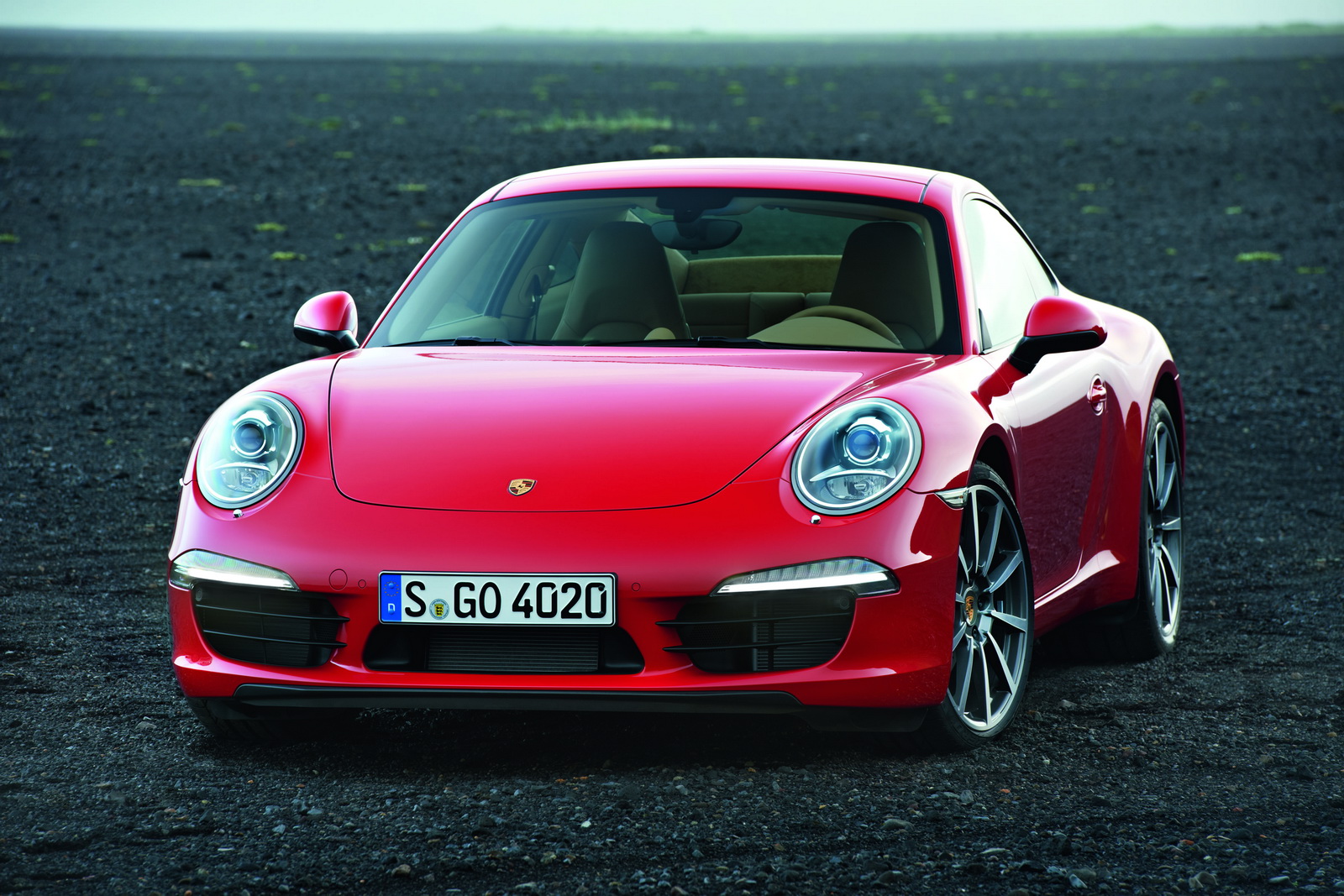
Porsche 991 (2012)


Just last week, Porsche lifted the curtains on the next iteration of the 911, codenamed 991, ahead of their world premiere at the Frankfurt car show in September. 
For the time being, the Germans have released initial details about the base Carrera and Carrera S coupe models, which are equipped with a 350HP and a 400HP boxer engine respectively. 
Oh, and one last thing: apart from the rear-engined layout, there are two other things that never changed in any 911: the five-dial instruments layout and the position of the ignition key at the left of the steering wheel.


Porsche 997 (2004-2011)


Although the 997 was not as big as an evolution in the engineering department as the 996, it sported a much improved styling that appealed greatly to 911 fans. 
The headlights reminded the 993, the completely redesigned interior was of higher quality and at the same time, more faithful to the original 911. Thus it reached a 100.000 sales than any other 911 in history.
The 2008 facelift model sported only minor styling changes, such as the redesigned rear lights. Under the skin, though, it entered the 21st century by replacing the obsolete 5-speed Tiptronic auto transmission with the much better 7-speed dual-clutch PDK, while the Carrera 4 got a revised four-wheel drive system.

Porsche 996 (1998-2004)

For the next generation of the 911 Porsche finally gave in and, for the first time ever, produced a water-cooled flat-six for the 996 that put a stop to a 34-year history. 

Initially criticized for sharing its “egg-shaped” headlamps (that were changed in the 2002 mid-life facelift) and also much of its structure with the smaller and cheaper Boxster, it also had a completely redesigned interior. Engine capacity was still at 3.6 liters, but power climbed to 320HP. The range was expanded with sportier versions such as the RS and GT3. 


Porsche 964 (1989-1993)


The first major changes were implemented in the 1989 911, code-named 964. Drawing from the 959’s technology, it was first launched in a four-wheel-drive configuration as the Carrera 4, one year ahead of the RWD Carrera 2. 
It featured a completely redesigned chassis and more aerodynamic body, coil springs suspension, ABS, airbags and, for the first time, power steering. Engine capacity grew to 3.6 liters and power to 250HP. 

Porsche 911 (1964-1989)


The first ever edition of the 911 was powered by a 2.0-liter 130HP air-cooled flat-six mated to a “Type 901” gearbox. It was very compact in size and the design was the work of Ferdinand “Butzi” Porsche, Ferdinand “Ferry” Porsche’s son. The 912 was also launched as a replacement to the 356, with the 911’s bodywork but with a four-cylinder, 90HP 1.6-liter engine.
In 1966, Porsche introduced the 911S with a more powerful 160HP engine followed in 1967 the Targa with a removable roof panel. One year later Porsche increased the wheelbase from 2,221 mm to a still very compact 2,268 mm in order to improve the 911’s handling, without changing its overall dimensions.
The 911S received a fuel injection system, and Porsche introduced a semi-automatic four-speed “Sportomatic” gearbox.
In 1970, the capacity of the boxer engine was increased to 2.2 liters, resulting in power upgrades for the base 911T (125HP), the 911E (155HP) and the 911S (180HP).
Another change in capacity, this time to 2.4 liters, was on the cards for the 1972-73 E and F-Series. The 911T got 130HP (140HP in the US), the E 165HP and the S 190HP while a new, stronger transmission, the 905 was also introduced. The increased power of the base, U.S. market 911 was due to the use of Mechanical Fuel Injection, which wasn’t available to other markets that still had to do with carburetors.


A special mention should be made to the homologation-special 1972-74 Carrera RS. It sported a larger, 2.7-liter engine with 210HP, redesigned suspension, larger brakes and enlarged wheel arches. It is still considered a classic and, perhaps, the purest 911 ever made.
In 1974, the larger capacity engine of the RS made it to the rest of the range, which comprised of the 911, 991S and 911 Carrera. It also gained different looks thanks to bigger bumpers due to stricter US safety regulations. One year later the 911 Turbo was introduced. It had a wider bodywork, the now famous “whale tail”, a capacity of 3.0 liters and an output of 260HP that eventually topped 300HP when the boxer’s capacity rose to 3.3 liters.
In 1981’s Frankfurt Motor Show, Porsche displayed a cabriolet concept, the brand’s first real open top car since the 356. It entered production one year later and has since remained in the 911’s line-up. In 1984, the 911 gained a new 3.2-liter engine and the “Carrera” moniker was adopted by the regular versions. A new Getrag gearbox, the G50, was added in 1987.

Porsche 911 Carrera

Porsche is proud to present the new Porsche 911 Carrera, a completely new generation of the iconic coupe that has been acclaimed as one of the world's benchmark sports cars since its launch in 1963.
Tradition meets modernity
True to the 911 tradition, the distinctive Porsche design language exudes power and elegance. The unmistakable silhouette still catches the eye while incorporating new, exciting contours and precisely designed details; a 100mm longer wheelbase for improved stability and greater interior space; front and rear overhangs are shorter, maintaining the compact footprint that has been a longstanding 911 attribute; the sporting stance is emphasised by the lower roof line and a wider front track increases on-road presence further still while raising the renowned chassis dynamics.


The rear-mounted, flat six cylinder engine is an equally symbolic component of the 911 identity; and behind the rear axle of the new car lies an uprated range of powerful, efficient and evocative 'boxer' engines. The Porsche 911 Carrera is powered by a new 3.4-litre engine developing 350 hp, and the Carrera S features a 400 hp version of the familiar 3.8-litre. These new engines offer performance improvements for both models. The 3.4-litre Carrera with PDK accelerates from 0-62mph in 4.6 sec, 0.1 sec quicker than the prior model. Pressing the Sport Plus button on the optional Sport Chrono Pack cuts that to 4.4 sec. The 3.8-litre Carrera S with PDK can accelerate from 0- 62 mph in 4.3 sec (Sport Plus 4.1 sec), 0.2sec quicker than its predecessor.

Tuesday, August 23, 2011

2010 Porsche Boxster Spyder


With the new Porsche Boxster Spyder, Porsche is introducing a new lighter version of the mid-engine roadster Porsche Boxster at the 2009 Salon in Los Angeles in December, the specification of distinctive style and techniques that represent the true , purest form of the Porsche sports car - easy, powerful, open roofs, and very effective.

This is precisely the formula already used in the creation of the most successful sports and racing cars throughout the history of Porsche, from the legendary Porsche 550 Spyder in 1950 for the RS Spyder Le Mans Prototype car if successful in Motorsports today.
Weight of 1275 kg, the Porsche Boxster Spyder is the lightest of the Porsche line-up, and continue this philosophy in a comprehensive package provides a clear road approval, which is a common desire to Porsche customers.

The new model range has become the third version of the Boxster, Boxster and Boxster S, which combines, but it stands out clearly at first sight, other versions are equipped with mid-roadster, simply because the Spyder has been developed primarily for use outdoors. Low, soft light spreads far behind and is intended to protect drivers and passengers in the bright sun, wind and rain. When closed, the soft one measure of extra-low side windows and two unique bulges is a striking piece of the back door, stretched, and has an elegant silhouette reminds Porsche Carrera GT.

2013 Porsche 911 Carrera

Porsche is proud to present the new Porsche 911 Carrera, a new generation of the iconic coupe was hailed as one of the sports cars of the benchmark since its launch in 1963.


Tradition meets modern

911 Faithful to the tradition, the power of language design and distinctive Porsche exudes elegance. The characteristic shape that draws attention while adding new and interesting details contours precisely designed and a wheelbase 100 mm longer for better stability and more interior space, front and shorter overhangs that keep the 911 low profile was an attribute of time, the sportsmanship is emphasized by the low roofline and a wider track front increases the presence on the road even while increasing the renowned chassis dynamics.
The rear-mounted, flat-six cylinder engine is also part of the identity token 911, and behind the rear axle of the new car is an improved range of powerful engines, effective and evocative "boxer". Porsche 911 Carrera is powered by a new 3.4-liter engine develops 350 hp, and the Carrera S is equipped with a 400 hp version of the familiar 3.8-liter. These new engines offer performance improvements for both models. The 3.4-liter Carrera with PDK accelerates from 0-62 mph in 4.6 seconds, 0.1 seconds faster than the previous model. By pressing the Sport More on cutting optional Sport Chrono Package, 4.4 sec. The 3.8-liter Carrera S with PDK can accelerate from 0 to 62 km / h in 4.3 seconds (4.1 sec Sports Plus), 0.2sec faster than its predecessor.

Thursday, August 18, 2011

2012 Porsche 911 Carrera S


The most eye-catching alterations concern the concave front LED daytime running lamps, the door-mounted exterior mirrors and the much thinner and more futuristic looking LED tail lamps that adorn the more heavily sculpted rear end.


As anticipated, the new 911's interior blends the two styling worlds of the 997 and the Panamera into one. A key highlight is the pronounced lower part of the center console that hosts a number of buttons.


Move away from the styling and you'll find a larger platform with a 4.0-inch longer wheelbase as well as a new pair of engines, with the basic Carrera sporting a 3.4-liter boxer delivering 350HP, and the Carrera S, a 3.8-liter flat-six producing around 400-horsepower.

In both models, power is channeled to the driving wheels through a new 7-speed manual gearbox or an optional PDK transmission.


Tuesday, August 16, 2011

Mazda Minagi Concept

The Mazda Minagi concept car embodies Mazda's new SkyActiv technologies and new KODO design language, signaling the way for the next generation of Mazda cars to come.
The Mazda Minagi concept makes its world premiere at the 2011 Geneva Motor Show as the expression of Mazda's new SkyActiv technologies and new KODO design language. It is the first model which showcases characteristics likely to be seen in the next generation of Mazda cars.
For this reason, Mazda has fully incorporated its SkyActiv technologies into every aspect of driving performance, including the powertrain, chassis, and even body design. As the second concept vehicle to incorporate Mazda's new 'KODO - Soul of Motion' design language, Minagi challenges conventions with emotional design and exhilarating performance.

While Shinari was a pure design concept to express the full potential of KODO design, Mazda Minagi gives a glimpse of the next generation of products to come. As the second concept car to adopt Mazda's KODO design theme, Minagi's design elements combine the expression of energy pulsing throughout the vehicle with the keen agility to move about freely and nimbly. With its upright, compact packaging, Mazda Minagi offers a vision of KODO design that is different to Shinari, yet it shares the same sinuous, powerful stance.
"I wanted to convey something different from the Mazda Shinari. I felt a compact crossover SUV was the perfect vehicle to express agility and focused movement; the flexibility of four limbs moving in unison, and an upright posture."

Sunday, August 14, 2011

Use Powerful Forklift Parts In Your Truck

by: John Anthony

Forklifts are powered industrial trucks used in a number of industrial and warehousing applications. Forklifts are used in lifting and transporting huge loads and cargo. Important forklift truck accessories include rotators, roll clamps and carton clamps as standard attachments. Rotators help in handling skids and other speciality materials. Roll clamps are of two types: mechanical or hydraulic. These forklift truck attachments are used for handling barrels or paper rolls.

Today forklift truck attachments are available separately to meet the varying needs of a single user. The user can use these forklift truck accessories on a standard forklift by simply attaching the desired attachment on it. Forktruck attachments are available for lifting heavy loads and moving them in areas that are difficult to reach. Quick-tach truss boom is one such attachment that yields greater manoeuvrability during construction works. Hoppers and self dump buckets are used in cleaning the debris and unwanted materials from work sites. Carton clamps are another type of attachments that enable the lift operator to open and close the clamp around the load allowing it to pick it up smoothly.

Forklifts are hazardous machines, so they should be handled with care. Finding the right forklift truck accessories is therefore important. Before attaching any forklift truck attachments on the equipment, you should ensure that they meet the OSHA guidelines and are matching the specifications of the forklifts in use. It is dangerous to overload the forklifts. The allowable weight is labelled on every machine, so it is advised that you strictly follow those instructions. Overloading will result in skidding and overturning. This may bring huge damage to people and property, so care should be taken to avoid such mishaps. By using the best quality forklift truck accessories you can avoid accidents.

Selecting the right accessories and forklift truck attachments helps you save hugely on the cost of operation. If you are equipped with the right forklift, you can get the work done in an efficient manner. Forklifts are available in a variety of sizes and specifications. If you are buying forklift truck accessories, you must ensure that they suit the machine and are able to carry out the work effectively. Never overestimate the power of forklift parts and its accessories. All parts and accessories of the forklifts have to be maintained regularly so that they perform efficiently ensuring safety and satisfaction to workers.

If you are planning to buy or hire a forklift truck, go for good quality trucks from famous brands like Linde Material Handling, Raymond, Toyota, Mitsubishi, Hyster and Atlet. They are the leading manufacturers of http://www.tradepub.com/free-offer/global-finance/gf?sr=hicat&_t=hicat:1057  forklift trucks, so you can rely on their products confidently. Identify the authorised dealers of these companies and get the best quality product that suits your budget. If your budget is low, you may opt for used forklifts and fork truck attachments which are also available as fully functional. You may procure these attachments from the same dealers who also deal with sale/purchase of old forklifts and accessories. Buying a used forklift will be a great deal for those who cannot afford for new ones.

Friday, August 12, 2011

2011 KIA Sportage SX20

Scheduled to arrive in dealer showrooms later this month, the 2011 KIA Sportage SX front-wheel drive (FWD) features a starting Manufacturer’s Suggested Retail Price (MSRP) of $25,795 while all-wheel drive (AWD) models feature a starting MSRP of $27,295
The KIA Sportage SX joins the 2011 Optima Turbo as Kia’s second vehicle in the U.S to feature the powerful Theta II 2.0-liter Turbo GDI engine and adds unique exterior and interior features and luxury appointments to provide consumers a high performance and high value CUV. In combination with a highly efficient six-speed automatic transmission, the new KIA Sportage SX features up to 256 horsepower while maintaining class-leading fuel economy1 of 27 miles per gallon on the highway, better than any other turbo-equipped compact CUV on the market today. In addition to powertrain enhancements, the KIA Sportage SX employs sport-tuned suspension featuring firmer shock and strut rates for improved handling and dynamic performance over non-SX models.

 On the outside, the KIA Sportage SX models receive unique 18″ alloy wheels, a signature SX grille, dual exhaust, and special side sill moldings. Exterior updates are complemented by SX-specific interior appointments adding more refinement inside the cabin, including standard aluminum door sills and a sleek new supervision gauge cluster. Available exclusively on the KIA Sportage SX, Orange and Blue interior color packages offer more interior color choices for potential buyers. The Orange Color Package includes orange stitching on the steering wheel, center console, and seats coupled with orange accents on the door panels and air vents. A unique blue patterned cloth seat and blue interior accents are included as part of the Blue Color Package.


Kia Motors’ Theta II 2.0-liter Turbo GDI engine delivers significant performance with a powerful inline four-cylinder turbocharged engine that produces up to 256 horsepower and 264 pound-feet of peak torque. The KIA Sportage SX turbo utilizes a twin-scroll design which offers improved combustion efficiency, more available low-end power, and reduced turbo-lag as compared to more traditional single-scroll turbo systems. 

2012 KIA Rio 5-Door First Photos

KIA has revealed the first official photos of the 2012 KIA Rio 5-Door. The new KIA Rio will be available in 3- and 5- door body styles.
New KIA Rio has its own interpretation of Kia’s signature grille, integrated with the headlamps to give a new twist on the Kia family look. In profile, the body to glass ratio and its strong wedge form give new Rio a dynamic sporty stance.

The new KIA Rio features a wheelbase extended by 70 mm (to 2,570 mm) and promises greater passenger space and comfort, together with increased cargo capacity to 292 litres (hatchback) and 390 litres (sedan). Exterior dimensions changes include: +55 mm (overall length), -15 mm (height) and +25 mm (overall width) to enhance the feeling of sportiness.
No picture available for interior now, but KIA says it will deliver a high level of quality previously associated with larger models – together with a wide selection of trim options.


The world premiere of the new Kia Rio will be celebrated at the Geneva International Motor Show on Tuesday, March 1, 2011 – alongside another all-new product for Kia, the next generation Picanto city car – during its press conference, taking place at 16.15 (CET) on the Kia stand in Hall 6. Also being displayed at Geneva, and making its European debut, is the innovative hybrid version of Kia’s stunning Optima sedan, scheduled to go on sale in the US market later this year.

Tuesday, August 9, 2011

2012 Peugeot 508 RXH

2012 Peugeot 508 RXH. Diesel-electric hybrid and distinctive high end appeal combine to offer an original view of the world of all-road vehicles and enhanced driving pleasure: the new Peugeot 508 RXH. This demonstrates the modern and enhanced top-of-the-range vision for Peugeot and will be unveiled today in preview. The style of the Peugeot 508 RXH and its innovative HYbrid4 drive unit provide features allowing it to combine freedom and driving pleasure in a form never seen before in the segment: 200 bhp, Four-wheel drive, ZEV 100% electric mode, Emissions of 109 g/km of CO2.


After the launch of the 508 Saloon and SW in spring 2011, acclaimed for its styling elegance, its presence and its high-level build-quality and attention to detail, the Peugeot 508 RXH again raises the profile of the entire Peugeot brand reinforcing its technological and environmental lead.
Its posture and its specific design immediately place it in the world of top-of-the-range all road vehicles. Unique, refined, raised, widened, it is also distinguished by a singular visual signature, with its distinctive LED lights visible both at day and night, giving an impression of three vertical ‘lions’ claws on each side of its ‘floating’ grille, the style of which is even more striking.
To reinforce its exclusive character, the interior of the Peugeot 508 RXH benefits from special features with distinctive colours and luxurious materials, like its premium quality interior and upholstery.


Its unique level of finish and equipment is coherent with the top-of-the-range and technological positioning of the vehicle. Richly equipped as standard (Open & Go system, electric front seats, head up display, 18″ wheels, panoramic glass roof, dark-tinted acoustic laminated side windows, latest generation audio and satellite navigation unit, it welcomes its occupants with care, refinement and a high level of comfort.
Equipped with the 2.0 l HDi FAP HYbrid4 drive train, a world first when featured in the 3008 Hybrid4, the diesel-electric hybrid drive unit in the Peugeot 508 RXH extends driving pleasure and freedom to …

Friday, July 22, 2011

Mercedes C63 AMG DTM Safety Car

The new Mercedes-Benz C63 AMG is being used as the Safety Car for the 2011 DTM season. Following the DTM presentation in Wiesbaden on 10 April 2011, the new Safety Car makes its debut on 1 May 2011 at the opening race of the German Touring Car Masters season at the Hockenheimring in Baden-Württemberg. The V8 Sports Saloon only had to be modified slightly for its demanding DTM task. Responsibility for development and production of the Mercedes-Benz C63 AMG Safety Car was entrusted to the specialists in the AMG Overall Vehicle Development department and the AMG Performance Studio.
Decisions regarding the deployment of the Safety Car are taken by the Deutsche Motorsportbund (DMSB) - German motor racing's governing body - which assumes responsibility for safety implementation and
compliance as well as performing official sports functions in accordance with the DTM regulations. Piloted by racing driver Jürgen Kastenholz (43), the Mercedes-Benz C63 AMG Safety Car has the job of ensuring maximum safety for the racing drivers and spectators in the event of dangerous situations such as extreme weather conditions, accidents or other incidents. When radioed by Race Control, the Safety Car positions itself at the head of the DTM field and leads the cars around the circuit until normal racing can be resumed.
The new Mercedes-Benz C63 AMG being used for the 2011 DTM season scales new heights in terms of design and technology: the AMG 6.3-litre V8 engine has an exceptionally high output of 358 kW (487 hp) and a peak torque of 600 Nm. The increase in output versus the standard 336 kW (457 hp) engine is due to the AMG Performance Package, which is optionally available for any C63 AMG model and enables the car to accelerate from 0 to 100 km/h in 4.3 seconds (Estate 4.4 seconds). For the AMG Performance Package the engine specialists have placed their trust in a technology transfer from the Mercedes-Benz SLS AMG: the forged pistons, connecting rods and lightweight crankshaft have been adopted from the gull-wing model. The lower inertia of the three-kilogram lighter components allows the naturally aspirated eight-cylinder engine to rev freely and respond even more promptly. Distinguishing features of the Performance Package include the variable intake manifold painted in titanium grey and the AMG high-performance braking system with compound brake discs at the front axle.
New equipment includes the innovative AMG SPEEDSHIFT MCT 7-speed sports transmission, which incorporates a wet start-up clutch and four transmission modes as well as double-declutching and RACE START functions for optimum driving dynamics. Distinguishing features of the current model include the aluminium bonnet with modified powerdomes, the new radiator grille, the new headlamps, the new AMG rear apron with a distinctive black diffuser insert and active rear-axle cooling. To optimise radiator inflow, the AMG front apron on the DTM Safety Car features enlarged openings and side air outlets, while the AMG carbon-fibre spoiler lip on the boot lid reduces lift at high track speeds. In keeping with this design, the DTM Safety Car also sports AMG carbon-fibre exterior mirrors.
Outstanding grip thanks to differential lock and 3-stage ESP®
The adjustable coil-over suspension together with the differential lock and the 3-stage ESP® ensures a high level of agility and outstanding grip on the race track. The Mercedes-Benz C63 AMG DTM Safety Car is shod with multi-spoke AMG light-alloy wheels painted in matt black with a high-sheen rim flange, 235/35 R 19 front tyres and 255/30 R 19 rear tyres.

The AMG high-performance braking system has been optimised for the race track: compound brake discs with six-piston brake callipers at the front axle and steel brake discs with four-piston brake callipers at the rear axle; all of the discs are internally ventilated and perforated. Meanwhile, the AMG sports exhaust system with special rear silencers produces an unmistakable AMG V8 sound.
Distinguishing features of the DTM Safety Car compared to the standard C63 AMG include distinctive DTM Safety Car logos, the LED light bar on the roof and the stroboscopic flashing LED lights at the front and rear. A number plate illuminated with LEDs and the words "Safety Car" on the boot lid make the car easier to see in poor weather conditions. To facilitate communication with Race Control, the Safety Car is fitted with a radio system and a TV monitor. Two AMG sports bucket seats with four-point seat belts provide ideal lateral support for the driver and co-driver, while the AMG performance steering wheel in nappa leather/Alcantara with steering-wheel shift paddles assures optimum vehicle control.
DTM Safety Car from Mercedes-AMG since 2000
Mercedes-AMG has provided the Safety Car ever since the "new" DTM's inception in 2000 and alternates with Audi from race to race. The flagship V8 C-Class model from AMG has been used in DTM since its launch in 2008. To help ensure safety on the race track in the Formula-1 World Championship, the SLS AMG is used as the Official F1 Safety Car, while the Official F1 Medical Car is a C63 AMG Estate.

Saturday, July 16, 2011

Porsche Carrera 2009

Porsche has unveiled the all-wheel-drive 2009 911 Carrera 4 and Carrera 4S in coupe and cabriolet guises after the launch of its rear-wheel-drive sibling earlier this month.

Featuring the same 3.6- and 3.8-litre engines, the Carrera 4/4S offers up to 8.5 per cent more power, up to 12.9 per cent more fuel economy, and 15.4 per cent lower CO2 emissions than its predecessor. For example, a Carrera 4 Coupé with the PDK dual-clutch transmission consumes a mere 10.1 litres of fuel per 100 kilometres - outstanding figures for a performance car.


The new generation of the Carrera 4 and Carrera 4S also features an electronically controlled PTM Porsche Traction Management, replacing the former all-wheel drive with its viscous multiple-plate clutch. This superior system developed for the 911 Turbo and modified for the Carrera models combines an even higher standard of driving stability, traction and agile handling further enhanced by the mechanical rear axle differential fitted as standard.

Thursday, May 26, 2011

1955 Porsche 550 Spyder


Porsche 550 Spyder: mali je, srebrni je i njemački je. Automobil je izrađen od aluminija i ima masu od 682 kilograma. Ne tako lijep podatak jest da je James Dean poginuo u jednom ovakvom. Motor sa 110 KS je 1.5-litreni motor s četiri bregaste osovine koji je projektirao Dr. Ernst Fuhrmann, a poznat je po svojoj složenosti. Podešavanje rada bregastih osovina samo je po sebi bio vrlo kompliciran zadatak, za što je danas kod modernih motora potrebno nekoliko minuta a na Furhmannovom je trajao satima.
Proizvedeno je svega 90 primjeraka ovog 550 Spyder modela. To je mali broj, ali s velikim značajem. Većina automobila spomenutih ovdje proizvedeno je u manje od jednoznamenkastim proizvodnim serijama. Ovaj određeni model ima oznaku šasije 5500061, i 61. je Spyder koji je izašao iz tvornice.